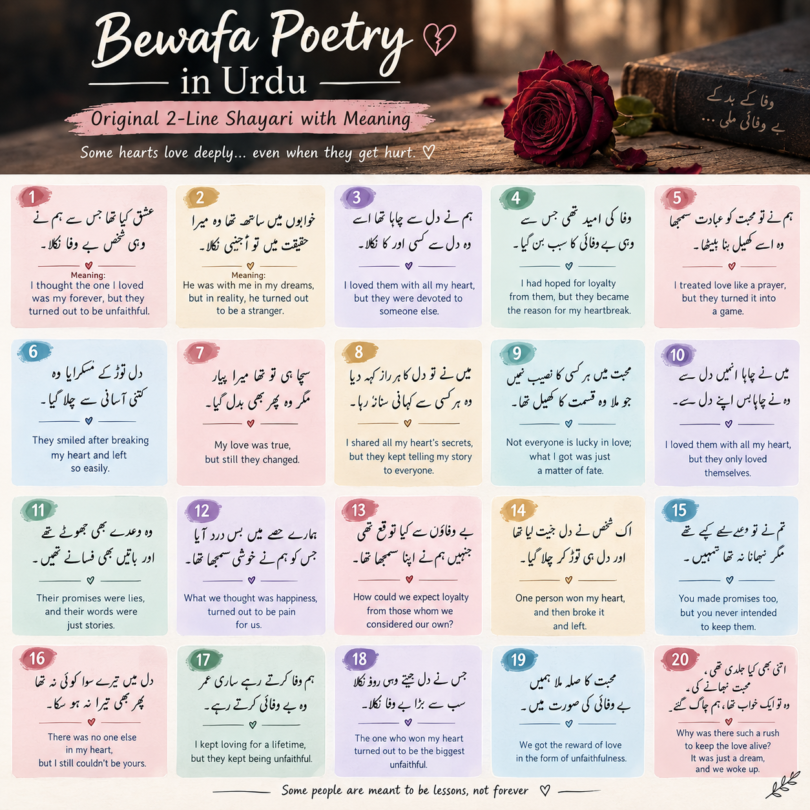

Bewafa poetry in Urdu gives words to the hurt that follows broken trust, unanswered feelings, or a promise that was not kept. Below, each original couplet appears in Urdu script with Roman Urdu and a simple English meaning, so you can read it, understand it, and share it in the format that suits you.
The verses in this article are original sample lines and are not attributed to a famous poet.
Bewafa poetry in Urdu text about broken trust
تم نے رخصت تو کیا، دل نے شکایت نہ کی
بس تری یاد نے خاموشی سے گھر کر لیا
Roman Urdu: Tum ne rukhsat to kiya, dil ne shikayat na ki / Bas teri yaad ne khamoshi se ghar kar liya.
Meaning: You left, and my heart did not complain; your memory simply made a quiet home inside me.
وعدہ ٹوٹا تو حقیقت بھی نمایاں ہو گئی
جس کو سمجھا تھا محبت، وہ کہانی رہ گئی
Roman Urdu: Waada toota to haqeeqat bhi numayan ho gayi / Jis ko samjha tha mohabbat, woh kahani reh gayi.
Meaning: When the promise broke, the truth became clear: what I thought was love was left as only a story.
Sad bewafa poetry for silence and distance
شکوہ کس سے کریں، خاموشی بھی تمہاری تھی
ہم نے خود ہر نشانی کو تسلی مان لیا
Roman Urdu: Shikwa kis se karein, khamoshi bhi tumhari thi / Hum ne khud har nishani ko tasalli maan liya.
Meaning: Who can I complain to? Even the silence was yours. I tried to take comfort in every small sign.
تم گئے تو راستہ خالی ضرور رہ گیا
ہم بھی چلتے رہے، سفر ختم نہیں ہوا
Roman Urdu: Tum gaye to raasta khaali zaroor reh gaya / Hum bhi chalte rahe, safar khatam nahi hua.
Meaning: Your leaving left the road empty, but I kept walking. The journey did not end there.
Short 2-line bewafa poetry for a status
اب تری راہ میں پلکیں نہیں بچھائیں گے
دل کو سمجھائیں گے، خود کو نہیں بھلائیں گے
Roman Urdu: Ab teri raah mein palken nahi bichhayenge / Dil ko samjhayenge, khud ko nahi bhulayenge.
Meaning: I will not keep waiting for you. I will comfort my heart without losing myself.
جو گیا، اسے دعا دے کے رخصت کیا
اپنی عزت کو کسی در پہ نہیں رکھا ہم نے
Roman Urdu: Jo gaya, use dua de ke rukhsat kiya / Apni izzat ko kisi dar pe nahi rakha hum ne.
Meaning: I let the person who left go with a prayer, but did not leave my self-respect at their door.
Bewafa dost poetry about a friendship that changed
دوستی مشکل میں پہچانی گئی، نام سے نہیں
تم نے ہاتھ چھوڑ دیا، ہم نے الزام بھی نہ دیا
Roman Urdu: Dosti mushkil mein pehchani gayi, naam se nahi / Tum ne haath chhor diya, hum ne ilzaam bhi na diya.
Meaning: Friendship is known through actions in difficult times, not just by its name. You walked away, and I chose not to turn the hurt into an accusation.
Betrayal by a friend can feel different from a romantic breakup: it may involve a broken confidence, absence when support was needed, or a sudden change in loyalty. Choose a line that fits what happened rather than using a romantic verse that does not match the relationship.
Poetry about healing and self-respect
درد کم ہوگا تو یہ بات سمجھ آئے گی
خود سے وفا بھی کوئی معمولی محبت نہیں
Roman Urdu: Dard kam hoga to yeh baat samajh aayegi / Khud se wafa bhi koi mamooli mohabbat nahi.
Meaning: When the pain eases, you may see that being loyal to yourself is a meaningful kind of love, too.
تمہارے بعد بھی موسم تو بدلتے رہتے ہیں
دل کو دیر لگی، دنیا نہیں رکی
Roman Urdu: Tumhare baad bhi mausam to badalte rehte hain / Dil ko dair lagi, duniya nahi ruki.
Meaning: Life kept changing after you left. My heart needed time, but the world did not stop.
Bewafa, dhoka, and judai: what is the difference?
These words describe related but different experiences:
- Bewafa or be-wafai refers to disloyalty or not keeping faith with someone.
- Dhoka means deception or betrayal, often involving a lie or broken trust.
- Judai means separation or parting. A relationship can end without either person being unfaithful.
That distinction matters. A sad ending is not automatically proof of betrayal, so a line about judai may fit better when two people have simply gone their separate ways.
How to choose a line to share
For a WhatsApp status or short caption, pick a self-contained couplet that makes sense without extra context. If the reader may not read Urdu script, include the Roman Urdu version. If you are sharing a friend’s story—or a sensitive personal situation—consider whether a public post could reveal more than you intend.
Roman Urdu spellings can vary because Urdu sounds do not always map neatly to English letters. A transliteration is a reading aid, not a single official spelling; the Urdu script remains the clearest reference for the original wording.
Frequently asked questions
What does “bewafa poetry in Urdu” mean?
It means Urdu poetry about disloyalty, broken trust, or a loved one who did not keep a promise. Some readers search for it to express heartbreak; others want a short verse to use as a status or caption.
What is 2-line bewafa poetry?
It is a brief couplet that expresses an idea—such as betrayal, sadness, or self-respect—in two lines. Short couplets are convenient to read and share, while an accompanying meaning can help readers understand the message.
Can I use these verses as a WhatsApp status?
Yes. The couplets above are short enough to use as a status or caption. Choose the Urdu script, Roman Urdu, or both, depending on who you want to read it.
Is every breakup an example of be-wafai?
No. Judai means separation, while be-wafai means disloyalty. A relationship may end without deception or a broken promise, so choose words that reflect the situation accurately.
Are the couplets above by a famous Urdu poet?
No. They are original sample verses written for this article and are not attributed to a famous poet. If you publish poetry by a named poet elsewhere on your site, verify the wording and attribution before crediting them.
This version is designed to meet both the quick “find a line to share” need and the “what does this actually mean?” need. No article structure can guarantee search rankings or inclusion in AI-generated answers, but clear original content, accurate attributions, and direct answers give readers and search systems more useful information to work with.
Want me to turn this into a publish-ready webpage with FAQ schema and copy buttons for each couplet?